Places and Spaces
The International Network for Artistic Research in Jazz (INARJ) will host its fifth conference at Koninklijk Conservatorium Brussels from 25 to 27 February 2026. Following a call for contributions, we are looking forward to featuring presentations that address the conference theme “Places and Spaces” from various perspectives that use jazz and/or popular music practice as a mode of critical engagement. Selected presentations will also have the opportunity to submit an exposition for a special edition of ARJAZZ Journal for Artistic Research in Jazz, with a call for contributions being announced at the Conference. Moreover, the Conference will concide with the announcement of the upcoming transformation of the INARJ Network to become a Special Interest Group of the Society for Artistic Research (SAR) which will also include a formal call for membership.
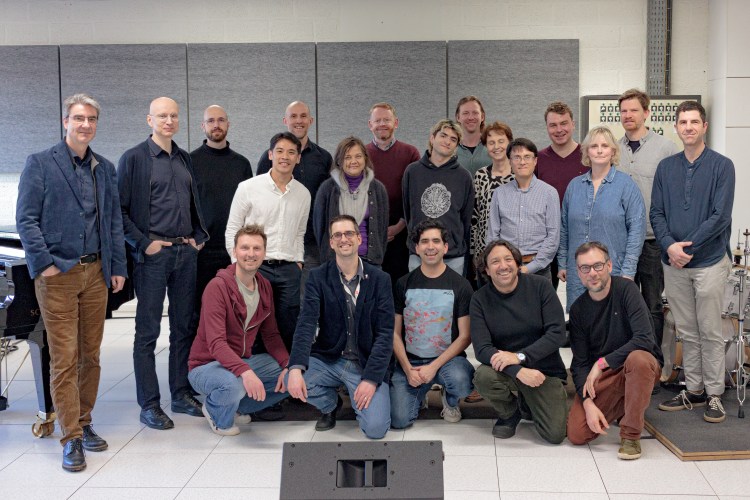
KCB Conference Report and Photos
Conference Topics
Performance spaces
The legendary venues, clubs and festivals, the NYC loft scene and the Arkestra house in Philadelphia, the ‘bandstand’ and the recording studio. Histories of jazz are also histories of the places where music is made. This strand opens the floor to presentations that explore themes related to performance spaces.
Digital spaces
As we progress through the third decade of the twenty-first century, digital communication assumes an ever more central role in our lives. From the metaphorical – Twitter as the ‘digital town square’ – to the literal – Meta’s ‘multiverse’, digital spaces challenge traditional notions of place and the way we interact with them. This strand invites contributions that engage with the meanings of music in digital spaces.
Embodiment
Numerous discourses challenge the once ubiquitous Cartesian distinction between body and mind. Approaches including corporality, embodiment, 4E cognition inform many areas of contemporary enquiry. The types of knowledge produced by artistic research can be characterised by Michael Polyani’s assertion that “we know more than we can tell.” This strand invites contributors to explore the way that artistic research can discursive these types of knowledge by conceptualising the body as a site of research.
Ecological spaces
The rapid acceleration of climate breakdown creates ever more urgency. While many claim that art is useless — or worse a distraction — in the face of this global crisis, others argue that art should be seen as an indispensable tool in the fight for a new future. As Amitav Ghosh writes, “imagining of possibilities is not, after all, the job of politicians and bureaucrats.” This strand asks contributors to imagine how jazz practice might intersect with sites of ecological importance.
5th INARJ Conference Convenors
Matthias Heyman (Koninklijk Conservatorium Brussel / Vrije Universiteit Brussel) – Host
Sebastian Bailey (doctoral student, University of Toronto / University of the Arts Berlin)
Andrew Bain (Royal Welsh College of Music & Drama)
Mike Fletcher (Royal Birmingham Conservatoire)
Birgitta Flick (doctoral student at University of Music and Performing Arts Vienna)
Monika Herzig (JAM MUSIC LAB Private University for Jazz and Popular Music Vienna)
Michael Kahr (JAM MUSIC LAB Private University for Jazz and Popular Music Vienna / University of Music and Performing Arts in Graz)
If you would like to connect with INARJ activities, please send us a message via the form below:




 International Network for Artistic Research in Jazz